The treatment of hypertension has changed: what you should know to protect your heart and kidneys
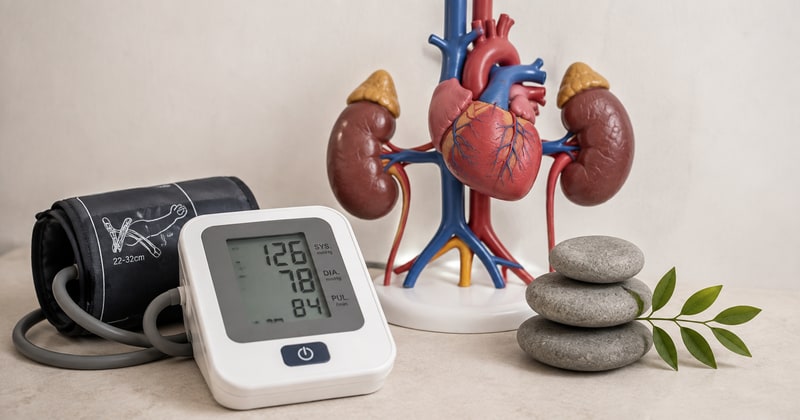
Introduction
Hypertension rarely announces itself. While we go about our daily lives, our blood exerts constant pressure on arteries that were never designed to withstand it for years on end. It’s like a water pipe operating every day under excessive pressure: at first, nothing appears to happen, but over time, tiny cracks begin to form.
As a nephrologist, I often see the consequences once that damage has already reached the kidneys. In other cases, it is the heart, brain, or blood vessels that show signs first. That is why prevention never begins when symptoms appear. It begins long before.
The latest 2025 American Heart Association hypertension guidelines do more than update numbers or treatment recommendations. They reinforce an idea worth remembering: the best way to treat hypertension is to prevent it from damaging our organs in the first place.
Hypertension is silent. The damage it causes is not.
Why does hypertension remain one of the biggest health challenges?
Today we know that hypertension is the most common modifiable risk factor for cardiovascular disease. In addition to increasing the risk of heart attack and stroke, it also contributes to heart failure, atrial fibrillation, chronic kidney disease, and even cognitive decline. For this reason, the general goal remains to maintain blood pressure below 130/80 mmHg in most adults, while adapting targets to special situations such as pregnancy or frailty.
This has an important implication.
The kidneys never work in isolation. We increasingly understand that the heart, kidneys, and metabolism function as one interconnected system. When one suffers, the others are affected as well.
That is why well-controlled blood pressure protects far more than the arteries. It also helps preserve kidney function for many years.
Taking care of your blood pressure means taking care of much more than a number.
If I feel fine, why should I worry?
Because hypertension can remain silent for decades.
Imagine gently hitting a wall every day. One blow won’t break it. Neither will ten. But thousands of blows over many years will eventually weaken it.
The same thing happens to our arteries.
Every heartbeat applies additional pressure, forcing the heart to work harder while progressively damaging the tiny blood vessels in the brain and kidneys.
One of the most important messages from the guidelines is the emphasis on early diagnosis and continuous monitoring, even in people without symptoms. Detecting hypertension before complications develop remains one of the medical interventions with the greatest long-term impact on health.
In my practice, I am often surprised by how many patients discover they have kidney disease during a routine blood test. Not because their kidneys suddenly started to fail that day, but because they had been silently exposed to excessive blood pressure for years.
The kidneys have a memory. Every year of uncontrolled hypertension leaves its mark.
Is having my blood pressure checked at the doctor’s office enough?
Increasingly, the answer is no.
One of the major recommendations is to give home blood pressure monitoring a central role.
The reason is simple. Blood pressure fluctuates throughout the day. The stress of visiting a doctor can temporarily raise it in some people, while others may have normal readings in the clinic but elevated blood pressure at home.
Measuring blood pressure correctly at home provides a more accurate picture of how it behaves in everyday life and helps healthcare professionals adjust treatment when necessary. The guidelines also remind us that cuffless devices, including many smartwatches, do not yet provide sufficient accuracy for diagnosing or monitoring hypertension and should not replace validated blood pressure monitors.
The goal is not to become obsessed with the numbers.
The goal is to know them so you can act before damage occurs.
What isn’t measured is difficult to prevent.
Is medication always necessary?
This is one of the questions I hear most often in clinic.
Fortunately, the answer is no.
The guidelines emphasize that treatment begins long before the first pill. Maintaining a healthy weight, following a dietary pattern such as the DASH diet, reducing salt intake, exercising regularly, limiting alcohol consumption, and managing stress remain the foundation of both preventing and treating hypertension.
At the same time, drug therapy has become increasingly personalized. Today, blood pressure values are only part of the picture. Overall cardiovascular risk matters just as much.
If someone has cardiovascular disease, diabetes, chronic kidney disease, or a high cardiovascular risk according to the PREVENT risk calculator, evidence supports starting medication earlier when blood pressure remains at 130/80 mmHg or above. For individuals at lower cardiovascular risk, the guidelines recommend giving lifestyle modifications a chance for three to six months before initiating medication, provided the clinical situation allows it.
This reflects an important principle: two people with the same blood pressure may require different treatment strategies because their overall risk is different.
Precision medicine is not about treating everyone the same way. It is about treating each person according to their individual circumstances.
What changes for people with kidney disease?
As a nephrologist, this is one of the recommendations I am most pleased to see reinforced.
For many years, hypertension was viewed primarily as a heart problem. Today we know that protecting the kidneys is a fundamental part of treatment.
Current evidence supports the use of renin-angiotensin system inhibitors (either ACE inhibitors or angiotensin receptor blockers—never in combination) in people with hypertension, chronic kidney disease, and albuminuria, as these medications help slow kidney disease progression while reducing cardiovascular risk. In people with diabetes, their role becomes even more important when chronic kidney disease or albuminuria is present.
This represents a genuine paradigm shift.
We no longer wait until the kidneys have lost a substantial amount of function before intervening.
We try to protect them much earlier.
Every blood test is an opportunity to prevent future disease.
What can you do starting today?
You don’t have to wait for your next medical appointment to begin taking care of your blood pressure.
Small changes, maintained over time, can have a remarkable impact:
- Know your blood pressure numbers and measure them with a validated home blood pressure monitor whenever your healthcare professional recommends it.
- Reduce the salt you add while cooking and choose fresh foods over ultra-processed products.
- Stay physically active on most days of the week.
- Maintain a healthy weight without relying on quick fixes.
- If you have diabetes, kidney disease, or a history of cardiovascular disease, don’t delay your follow-up appointments.
Prevention rarely depends on a single action. It is the result of many seemingly small decisions.
A nephrologist’s reflection
There is an image that often stays with me after finishing a clinic.
I think about all the people who came because a routine blood test or an incidental blood pressure measurement revealed something that had been silently progressing for years.
None of them came because their kidneys hurt.
None of them sought medical attention because they could feel their arteries losing elasticity.
Most of them felt completely healthy.
It reminds me that the most valuable medicine is not always the one that cures disease. More often, it is the one that prevents disease from developing in the first place.
As a nephrologist, I believe our responsibility goes beyond prescribing treatments. It also involves helping people understand what is happening inside their bodies while they still have the opportunity to change the course of their health.
Because the best consultation is not the one in which we adjust a medication.
It is the one that allows a patient, years later, to keep healthy kidneys, a strong heart, and an active life thanks to decisions they started making long before the first symptom ever appeared.
In one minute
- Hypertension can damage the heart and kidneys for years without causing symptoms.
- The goal remains to achieve good blood pressure control, tailored to each person’s characteristics and individual needs.
- Lifestyle changes continue to be the cornerstone of treatment.
- Measuring blood pressure at home with a validated monitor improves both diagnosis and long-term management.
- Prevention is always easier than treating complications.
Frequently Asked Questions
If my blood pressure only goes up when I visit the doctor, do I have hypertension?
Not necessarily. Home blood pressure monitoring or ambulatory blood pressure monitoring can help distinguish white-coat hypertension from persistent hypertension.
Can I use a smartwatch to monitor my blood pressure?
Not yet. Current guidelines recommend using validated cuff-based blood pressure monitors and do not support relying on cuffless devices for diagnosis or follow-up.
If I have kidney disease, should I pay closer attention to my blood pressure?
Yes. Hypertension accelerates the progression of chronic kidney disease, and good blood pressure control helps protect both the kidneys and the cardiovascular system.
Do lifestyle changes really work?
Yes. Strong scientific evidence shows that healthy eating, reducing salt intake, regular physical activity, and maintaining a healthy weight are first-line treatments for hypertension.
Reference
- Jones DW, Ferdinand KC, Taler SJ, Johnson HM, Shimbo D, Abdalla M, et al. 2025 AHA/ACC/AANP/AAPA/ABC/ACCP/ACPM/AGS/AMA/ASPC/NMA/PCNA/SGIM Guideline for the Prevention, Detection, Evaluation and Management of High Blood Pressure in Adults: A Report of the American College of Cardiology/American Heart Association Joint Committee on Clinical Practice Guidelines. Circulation. 2025
- National Institute for Health and Care Excellence (NICE). Hypertension in adults: diagnosis and management. NICE Guideline [NG136]. London: National Institute for Health and Care Excellence; 2019 (updated March 18, 2022)
- Williams B, Mancia G, Spiering W, Agabiti Rosei E, Azizi M, Burnier M, et al. 2018 ESC/ESH Guidelines for the management of arterial hypertension. Eur Heart J. 2018
Do you know what your blood pressure is and whether it is really well controlled?
If you don’t know the answer, today might be a good time to check it or discuss it with your healthcare professional. In upcoming articles, we will discuss what blood pressure values are considered normal, when blood pressure is classified as hypertension, how hypertension is classified, and why blood pressure targets are not the same for everyone.
Is there a topic you'd like me to cover? Suggest an article
28 July 2026
Newsletter
Get new articles
Leave your email and we'll let you know when a new article is published. No spam; you can unsubscribe anytime.
✓ Almost there. We've sent you an email to confirm your subscription; please check your inbox (and spam folder).
An error occurred. Please try again later.