Do you Really Know How Chronic Kidney Disease Is Detected?
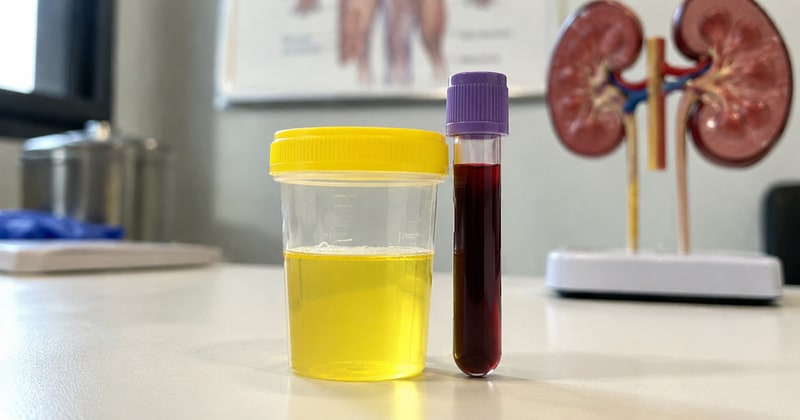
The Two Key Tests for Detecting Chronic Kidney Disease
Serum creatinine alone is not enough. Early diagnosis of chronic kidney disease requires the combined assessment of the estimated glomerular filtration rate (eGFR) and albuminuria.
Chronic kidney disease is defined as an abnormality of kidney structure or function that persists for at least three months and has implications for health. The key word is chronic: we are not talking about a temporary decline in kidney function, but rather a sustained impairment that, if left undetected, usually follows a progressive course.
Why Is CKD Called a Silent Disease?
The kidneys have a remarkable functional reserve. They can lose a substantial proportion of their function without causing any obvious symptoms. There is no pain and no clear warning sign. As a result, CKD is detected through blood and urine tests, not through the way a person feels.
This helps explain a worrying fact: more than 850 million people worldwide are estimated to be living with some form of kidney disease, twice as many as diabetes and around twenty times as many as cancer. Yet only about 6% of the general population and 10% of people at increased risk know the status of their kidney health.
Beyond Creatinine
Estimated Glomerular Filtration Rate (eGFR)
The estimated glomerular filtration rate (eGFR) is the best overall measure of kidney function. It estimates how much blood the kidneys filter each minute. A persistently reduced eGFR may indicate chronic kidney disease.
eGFR is not measured directly. Instead, it is calculated from serum creatinine using validated equations such as CKD-EPI. In certain situations, current guidelines recommend improving the accuracy of this estimate by combining creatinine with another biomarker: cystatin C.
An important concept to remember is that creatinine and eGFR move in opposite directions.
When kidney function declines, creatinine accumulates in the blood and its concentration increases. Conversely, when kidney function is normal, creatinine levels are generally lower and eGFR is higher.
However, creatinine also depends on muscle mass, age, sex, and other factors. For this reason, we do not interpret creatinine in isolation. Instead, we calculate the estimated glomerular filtration rate (eGFR) using validated equations, which provide a much more reliable estimate of kidney function.
A future article will provide a more detailed explanation of how the estimated glomerular filtration rate (eGFR) is calculated and how to interpret its results correctly.
Albuminuria
Albuminuria measures the amount of albumin, the most abundant protein in blood plasma, that leaks into the urine. Healthy kidneys retain almost all proteins. When albumin begins to appear in the urine, it is often an early sign that the kidney’s filtration barrier has been damaged—even when eGFR is still normal.
Why Are Both Tests Necessary?
This is, in my opinion, the most important message: people at risk of CKD should be assessed by measuring both eGFR and urine albumin.
A person may have a perfectly normal eGFR and still have elevated albuminuria, indicating early kidney damage and an increased cardiovascular risk.
Only by considering eGFR, albuminuria, and the underlying cause of kidney disease together can CKD be accurately classified and the risks of disease progression and cardiovascular complications properly estimated.
What Do Current Guidelines Recommend?
The KDIGO Clinical Practice Guidelines, the leading international reference for the evaluation and management of chronic kidney disease, establish this combined assessment as the standard approach for detecting and classifying CKD.
The process is straightforward:
- Identify people at increased risk, such as those with diabetes, hypertension, cardiovascular disease, or a family history of kidney disease.
- Measure both eGFR and albuminuria.
- Confirm that any abnormalities are persistent, classify the disease and estimate the individual’s risk of progression.
Detecting kidney disease early allows treatment to begin before complications develop and significantly increases the chances of slowing disease progression.
For healthcare professionals, this means not relying solely on a creatinine measurement when risk factors are present. For patients, it comes down to asking one simple but potentially life-changing question: “What are my eGFR and my urine albumin level?”
My Perspective as a Nephrologist
In my clinical practice, I see the same pattern far too often: patients reaching advanced stages of kidney disease without ever having had their urine albumin measured, despite living with diabetes or hypertension for many years.
In my experience, albuminuria remains one of the most underused tests in clinical medicine. It is inexpensive, requires only a simple urine sample, and yet it is ordered far less frequently than it should be.
The real paradigm shift is not simply adopting new guidelines, it is bringing this approach into everyday clinical practice: routinely assessing both eGFR and albuminuria, screening people at risk, and intervening before complications develop.
Ultimately, talking more about kidney disease prevention and less about dialysis means talking about years of healthy life gained.
Final Thoughts
Protecting your kidneys does not begin when symptoms appear—because by then, it is often too late. It begins with understanding two simple numbers: your eGFR and your albuminuria.
If you have diabetes, hypertension, cardiovascular disease, or a family history of kidney disease, ask your healthcare professional whether both your eGFR and albuminuria have been measured.
It is a simple question that could change the course of your kidney and cardiovascular health for decades to come.
Key Takeaways
- Chronic kidney disease often progresses silently for years without causing symptoms.
- Early diagnosis requires the combined assessment of estimated glomerular filtration rate (eGFR) and albuminuria.
- Early detection allows interventions that can slow disease progression and reduce cardiovascular risk.
Reference
Kidney Disease: Improving Global Outcomes (KDIGO) CKD Work Group. KDIGO 2024 Clinical Practice Guideline for the Evaluation and Management of Chronic Kidney Disease.
Do you know your eGFR and your albuminuria level?
If you belong to a high-risk group, ask your healthcare professional. And if you would like to learn more about cardiorenal prevention, I look forward to sharing future articles with you.
Is there a topic you'd like me to cover? Suggest an article
23 July 2026
Newsletter
Get new articles
Leave your email and we'll let you know when a new article is published. No spam; you can unsubscribe anytime.
✓ Almost there. We've sent you an email to confirm your subscription; please check your inbox (and spam folder).
An error occurred. Please try again later.